
Mental Status Exam Template: Complete Guide for Clinicians
Mental Status Exams (MSEs) are an essential part of clinical assessment in psychiatry, neurology, and general medicine. They provide a structured framework for evaluating a patient’s cognitive, emotional, and behavioral functioning. Using a mental status exam template helps clinicians organize observations systematically, ensures completeness, and facilitates clear communication between healthcare professionals.
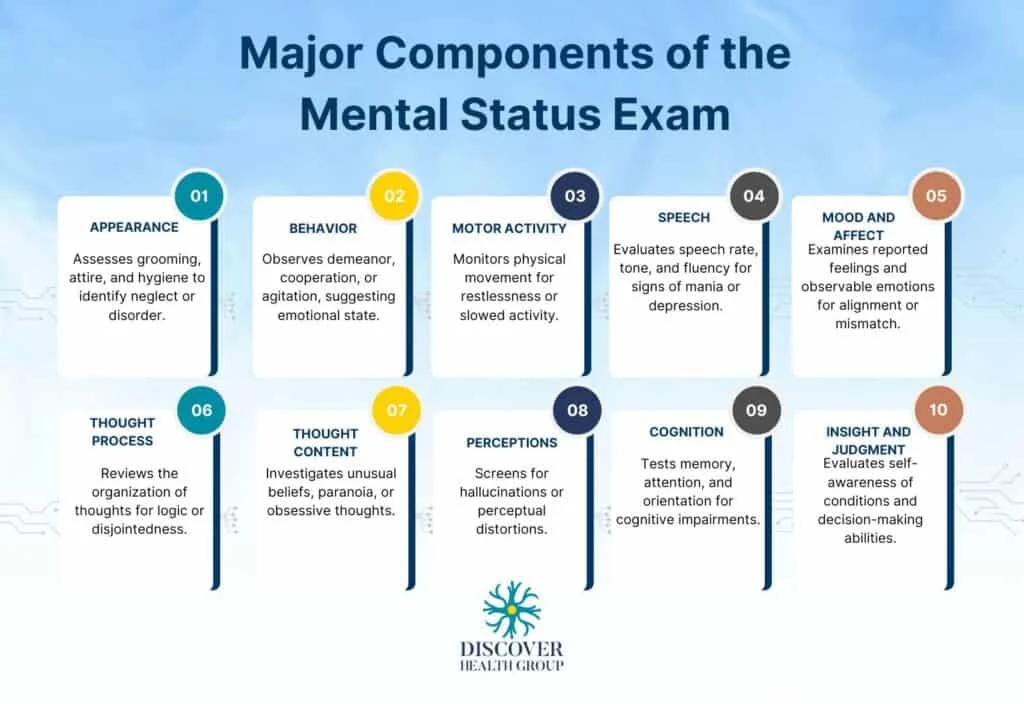
1. Core Components of a Mental Status Exam Template
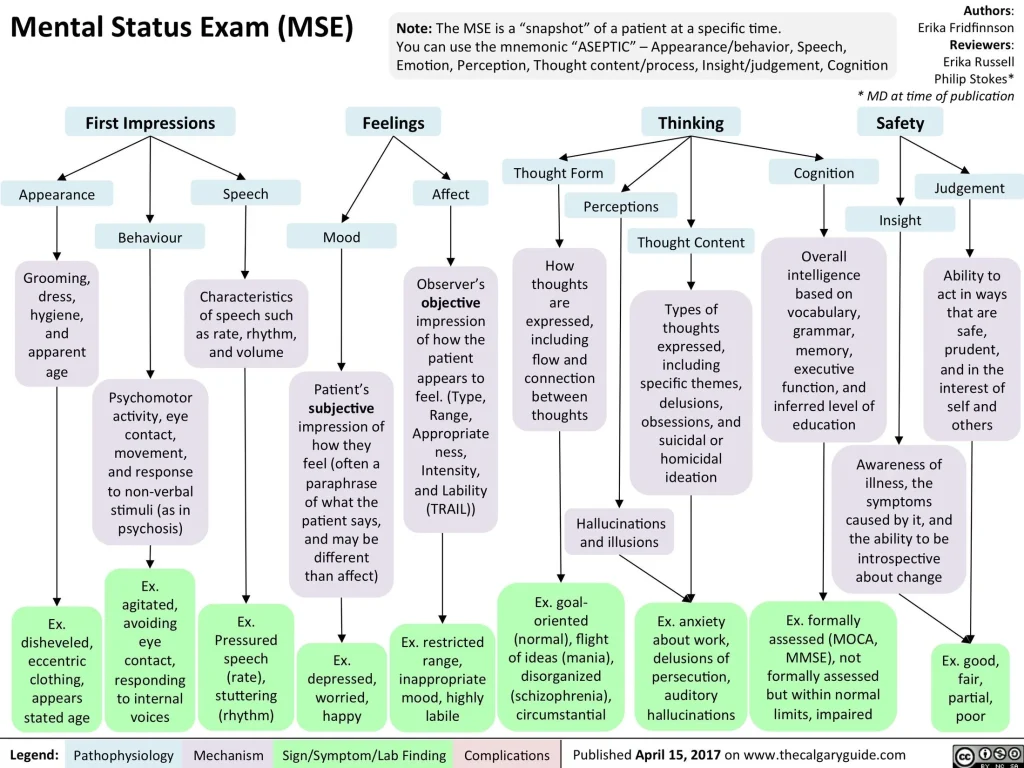
A well-structured MSE assesses multiple domains. Below is a standard framework often included in templates:
| Component | Description | Key Notes |
|---|---|---|
| Appearance & Behavior | Observations of hygiene, posture, gestures | Document notable behaviors |
| Speech | Rate, tone, volume, coherence | Note any speech abnormalities |
| Mood & Affect | Patient’s emotional state and expression | Match affect to mood |
| Thought Process | Logical, coherent, or disorganized | Include obsessions, delusions |
| Thought Content | Suicidal/homicidal ideation, delusions | Highlight risk factors |
| Perception | Hallucinations or illusions | Specify type and context |
| Cognition | Orientation, memory, attention | Mini-Mental State Exam scores if applicable |
| Insight & Judgment | Awareness of illness, decision-making | Note any deficits |
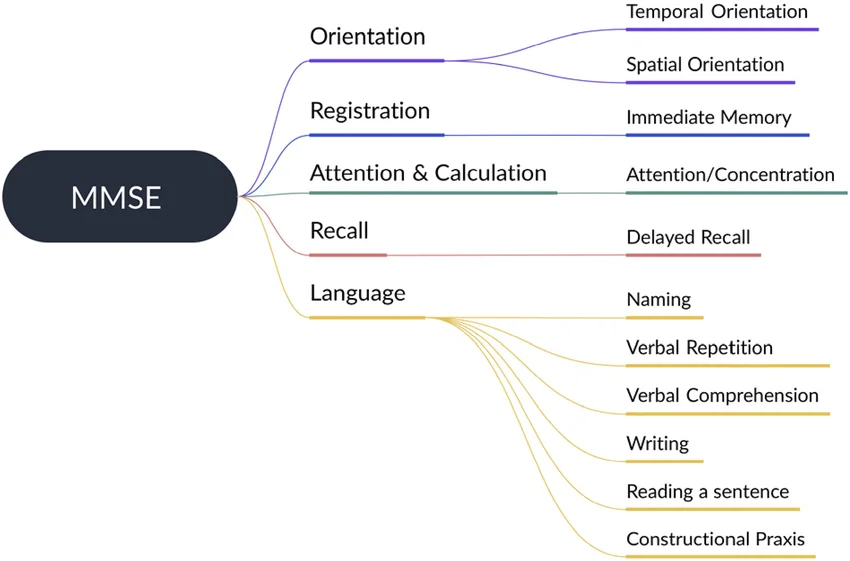
Tip: Include clear headings in your template for each domain to ensure no aspect is overlooked during patient assessment.
2. How to Build a Practical Mental Status Exam Template
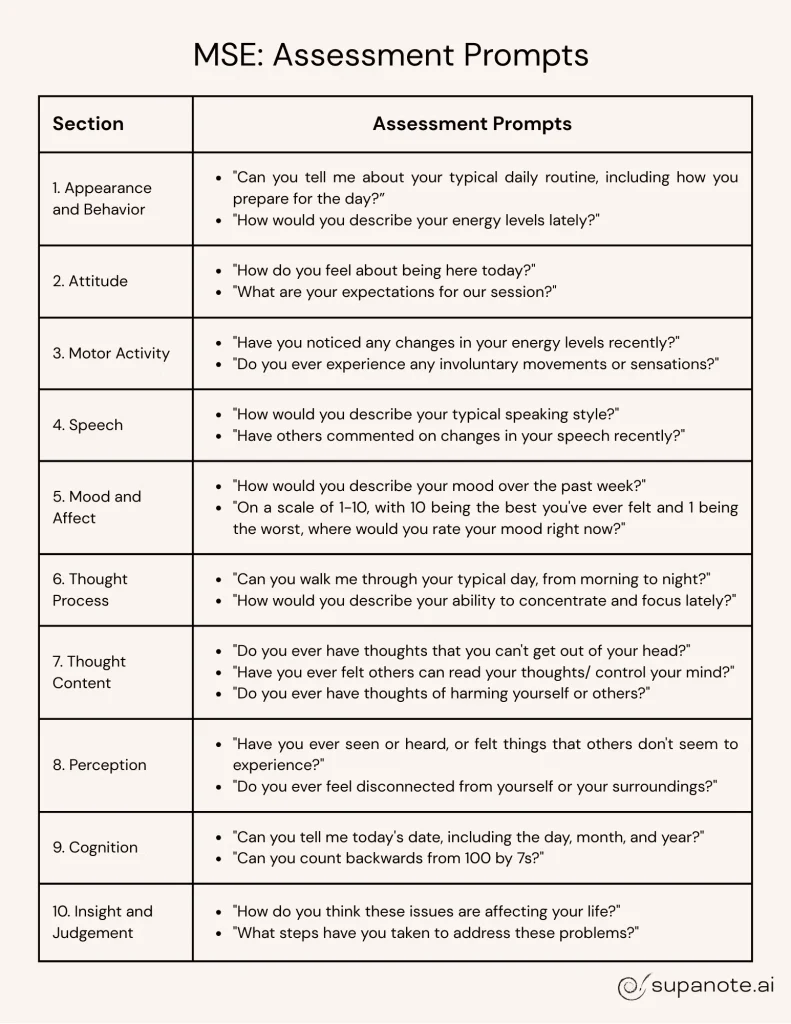
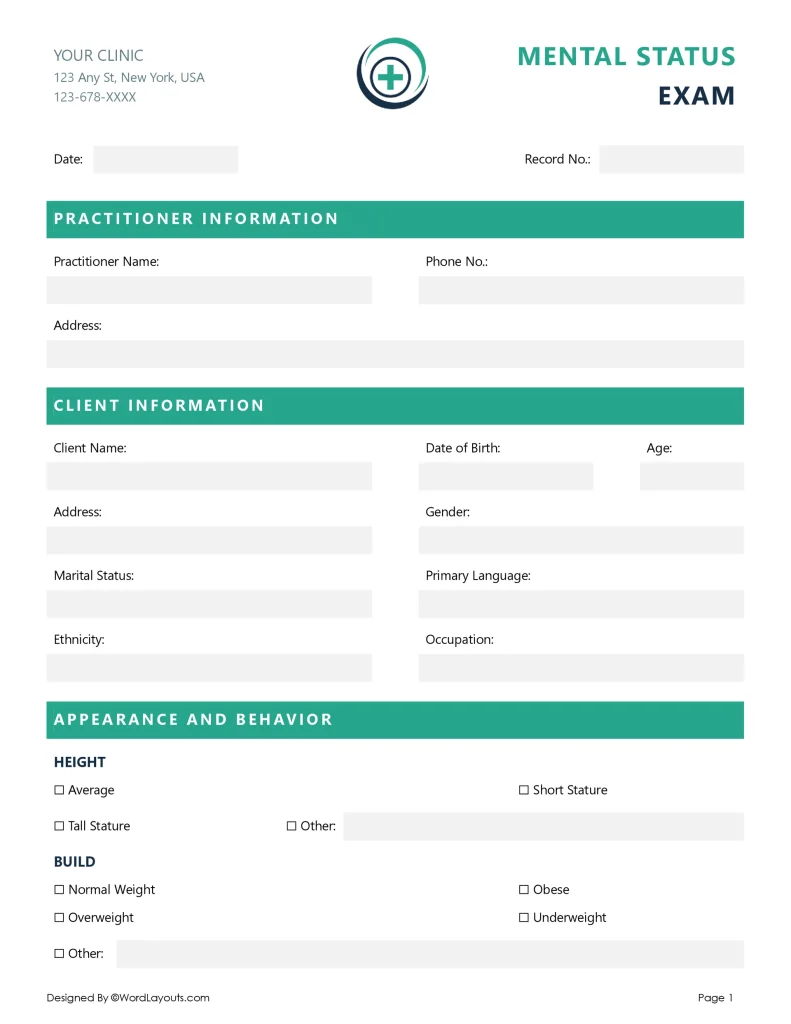
Creating a practical template involves both structure and clarity. Templates can be digital (Word, PDF, EMR) or printed forms for paper records.
Key elements to include in a template:
- Patient Information – Name, age, date, clinician’s name
- Reason for Visit – Chief complaint or referral reason
- Structured Sections – Corresponding to MSE components
- Optional Checklists – Quick boxes for common findings
- Narrative Section – Space for clinician notes and observations
👉 For professional guidelines, see American Psychiatric Association – MSE Guide.
3. Using a Mental Status Exam Template Effectively in Clinical Practice
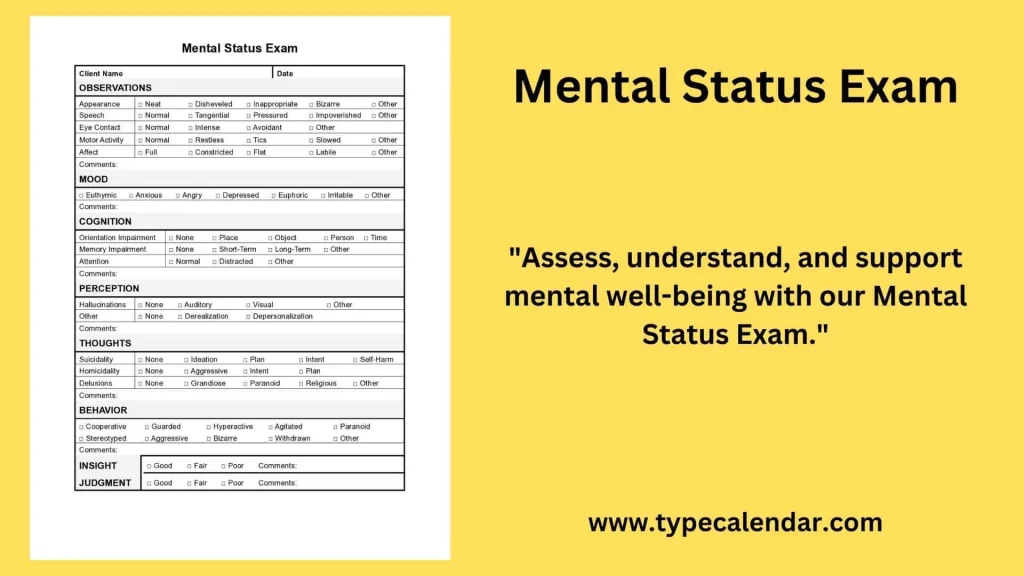
Even the most comprehensive template is only as useful as its application. Follow these steps for best practice:
- Preparation: Review patient history before the encounter.
- Observation First: Begin with nonverbal cues and behavior.
- Systematic Assessment: Use each template section methodically.
- Clarify Patient Statements: Ensure understanding and accuracy.
- Document Thoroughly: Complete all sections, even if normal.
- Review & Edit: Double-check for errors or omissions before finalizing notes.
👉 Learn more in How to Use a Mental Status Exam Template Effectively.
4. Templates for Different Clinical Settings
MSE templates should be adapted for specific environments:
| Setting | Template Considerations |
|---|---|
| Psychiatry Clinic | Emphasis on thought content, mood, and insight |
| Hospital | Focus on cognitive function, delirium assessment |
| Emergency Room | Rapid assessment, concise sections, critical risk flags |
Tip: Customize templates with sections most relevant to your patient population.
5. Common Mistakes and How to Avoid Them
Even experienced clinicians can make errors when using MSE templates. Here are common pitfalls:
- Skipping Sections – Always complete every component.
- Subjective Descriptions Only – Combine objective observations with patient reports.
- Inconsistent Terminology – Use standard psychiatric terms for clarity.
- Ignoring Risk Factors – Suicidal/homicidal ideation must be explicitly assessed.
- Overlooking Cognitive Testing – Simple orientation and memory checks are essential.
👉 Related article: Common Mistakes in Using Mental Status Exam Templates.
6. Downloadable Templates and Resources
Providing ready-to-use templates can save time and improve documentation quality. Consider offering:
- Word or PDF forms
- Pre-filled examples for training
- Checklists for rapid assessment
| Template Name | Format | Download |
|---|---|---|
| Basic MSE Template | Download | |
| Comprehensive MSE Template | Download | |
| Quick-Assessment MSE | Download | |
| Nursing Student Template | Download | |
| Advanced MSE Template | Download |
👉 Medscape’s overview of MSE: Medscape – Mental Status Exam Overview
Conclusion
A well-designed mental status exam template streamlines clinical assessment, reduces errors, and ensures consistent documentation. By combining structured templates with careful observation and accurate recording, clinicians can provide better patient care while maintaining professional standards.
Next Step: Explore [How to Use a Mental Status Exam Template Effectively] and download free templates to start implementing in your practice today.