How to Write a Mental Status Exam

A mental status exam often gets judged in seconds by the next clinician who opens the chart. If the note is vague, overgeneralized, or missing core elements, it slows care and creates risk. Knowing how to write a mental status exam means documenting what you actually observed, organizing it in a standard sequence, and making the note useful for diagnosis, handoff, and treatment planning.
Why the writing matters as much as the assessment
A solid MSE is not just a checklist completed during an interview. It is a clinical snapshot of the patient at a specific moment, written in language that another provider can understand and use. In practice, that means your documentation has to do three things at once: reflect direct observation, distinguish normal from abnormal findings, and stay concise enough for real workflows.
The main problem in weak MSE notes is not usually lack of effort. It is inconsistency. One clinician writes, “normal affect,” another writes, “appropriate,” and a third documents nothing about range, congruence, or intensity. Standardized structure reduces that variability and lowers the chance of omissions.
How to write a mental status exam step by step
The most reliable approach is to use the same order every time. That improves speed, especially in high-volume settings, and makes your note easier to scan.
1. Start with appearance and behavior
Document what is directly observable before moving into more interpretive domains. Include grooming, hygiene, dress, posture, eye contact, psychomotor activity, and general attitude toward the interview.
For example, “Well-groomed, dressed appropriately for weather, maintains intermittent eye contact, cooperative, mild psychomotor retardation.” That is stronger than “appears fine” because it gives concrete descriptors.
If behavior is notable, say exactly how. Agitated, guarded, restless, withdrawn, disinhibited, or responding to internal stimuli are all more useful than broad labels such as “abnormal behavior.”
2. Record speech objectively
Speech is frequently underdocumented. Include rate, volume, tone, spontaneity, fluency, and amount when clinically relevant.
A useful line might read, “Speech soft, slowed, and low in spontaneity, with normal articulation.” In a manic presentation, you might document, “Speech pressured, loud, difficult to interrupt.” These details support the broader clinical picture without requiring lengthy narrative.
3. Separate mood from affect
This is one of the most common charting errors. Mood is the patient’s stated internal emotional experience. Affect is your observed impression of emotional expression.
Document mood in the patient’s own words when possible, such as, “Mood: ‘anxious and exhausted.'” Then describe affect using observable terms like constricted, blunted, flat, tearful, labile, euthymic, or full range. Also note congruence when relevant: “Affect constricted and congruent with stated depressed mood.”
4. Describe thought process and thought content distinctly
Thought process refers to how thoughts are organized and expressed. Thought content refers to what the patient is thinking about.
For thought process, document whether it is linear, goal-directed, circumstantial, tangential, disorganized, loose, or flight of ideas. For thought content, note delusions, obsessions, preoccupations, suicidal ideation, homicidal ideation, hopelessness, paranoia, or grandiosity.
This distinction matters. A patient can have a linear thought process with paranoid thought content. Combining the two into one vague sentence can obscure important findings.
5. Assess perception carefully
Document hallucinations or other perceptual disturbances only as supported by the interview or observation. Specify modality when present: auditory, visual, tactile, or other.
For example, “Denies auditory and visual hallucinations” is clear. If positive, document the report precisely: “Reports intermittent auditory hallucinations of a male voice commenting on actions; not observed responding to internal stimuli during interview.” That balances patient report with your own observation.
6. Include cognition at the level appropriate to the setting
Cognitive documentation does not need to become a full neurocognitive exam unless the setting calls for it. At minimum, include orientation and a brief comment on attention, memory, or concentration when relevant.
A concise entry might be, “Alert and oriented to person, place, time, and situation; attention intact to conversation; recent memory mildly impaired by report.” In an emergency or inpatient setting, cognition may require more detail, especially if delirium, intoxication, or major neurocognitive disorder is in the differential.
7. Document insight and judgment separately
Insight refers to awareness and understanding of illness or symptoms. Judgment refers to decision-making capacity in real-world situations.
These are related but not identical. A patient may have limited insight into illness but intact basic judgment in structured settings. Examples include, “Insight fair; acknowledges anxiety symptoms but minimizes alcohol use” and “Judgment impaired as evidenced by recent high-risk impulsive behavior.”
8. Close with risk-relevant findings when indicated
Not every MSE requires a lengthy risk section inside the exam itself, but when suicidality, homicidality, psychosis, intoxication, or severe disorganization is present, your documentation must be explicit.
Avoid vague phrases such as “no issues with safety.” Instead write, “Denies current suicidal or homicidal ideation, intent, or plan” when appropriate. If risk is present, document the content clearly and align it with the broader assessment and plan.
What a clean mental status exam looks like
A practical way to learn how to write a mental status exam is to study the difference between weak and strong phrasing.
Weak example: “Patient is depressed. Behavior normal. Thinking okay. No psychosis. Insight and judgment poor.”
Stronger example: “Appearance neat, casually dressed, adequate hygiene. Behavior cooperative, mildly withdrawn, no abnormal movements. Speech slowed, soft, normal articulation. Mood: ‘down most days.’ Affect constricted and congruent. Thought process linear and goal-directed. Thought content notable for hopelessness, no delusions elicited. Denies auditory or visual hallucinations. Alert and oriented x4. Attention intact to interview. Insight fair. Judgment limited, as evidenced by recent medication nonadherence. Denies current suicidal or homicidal ideation, intent, or plan.”
The stronger version is not long for the sake of length. It is simply specific enough to be clinically meaningful.
Common documentation mistakes to avoid
The biggest mistake is substituting conclusions for observations. Writing “psychotic” is less useful than documenting persecutory delusions, auditory hallucinations, and disorganized thought process. The same applies to “manic,” “depressed,” or “anxious.” Show the features that support the impression.
Another common issue is internal contradiction. For example, charting “affect appropriate” and later documenting inconsolable tearfulness without reconciling the two creates confusion. Your note should read as one coherent picture.
Overuse of normal defaults also causes problems. Auto-populating “memory intact, judgment intact, insight intact” in every chart may save time in the moment, but it weakens note credibility if those elements were not actually assessed.
Finally, avoid copying the exact same MSE forward between visits unless the patient truly presents identically. The exam is time-sensitive. Even brief updates should reflect the current encounter.
Adapting the MSE to different settings
The right level of detail depends on the environment. In an emergency department, the note may need to prioritize agitation, intoxication, orientation, psychosis, and immediate safety concerns. In outpatient psychiatry, you may spend more space on mood, affect, thought content, insight, and treatment adherence. On a medical floor, cognitive status and fluctuating attention may take priority.
That is why templates work best when they are structured but flexible. A standardized format helps preserve completeness, while setting-specific emphasis keeps the note efficient. If you use tools from MentalStatusExamTemplate.com, the goal should be exactly that: fewer omissions without turning each exam into a generic form letter.
A simple framework you can use in practice
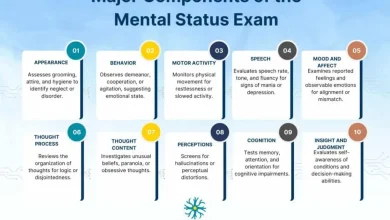
If you need a repeatable formula, think in this sequence: appearance/behavior, speech, mood, affect, thought process, thought content, perception, cognition, insight, judgment, and risk-relevant findings. Using the same order in every note reduces cognitive load and makes peer review easier.
You do not need to write a paragraph under every heading. A strong MSE is often compact. What matters is that each line reflects actual observation or patient report, uses standard terminology, and supports the rest of the assessment.
When your note is specific, consistent, and easy to scan, it does more than satisfy documentation requirements. It helps the next clinician see the patient clearly before they ever enter the room.